Why solar + storage demand is accelerating even without individual federal incentives.
For years, critics of solar energy made the same argument: renewable energy adoption only works if the government subsidizes it. That narrative is quickly unraveling. Even as some federal solar incentives and rebates sunset, demand for solar + storage continues to accelerate across the United States.
The drivers behind that growth have fundamentally changed. To begin with, consumers are not necessarily investing in distributed energy systems simply because of the environmental benefit. Increasingly, they are making decisions rooted in economics, resilience, predictability, and security. The world has become more volatile, and homeowners are responding accordingly.
Energy rates are increasing like never before with the growth of data centers and the electrification of the built environment and transportation. Additionally, mounting geopolitical instability, including ongoing tensions involving Iran and renewed concerns around global oil supply disruptions, is exposing the fragility of centralized energy systems.
At the same time, climate disasters are becoming more frequent, more expensive, and more disruptive, placing enormous pressure on electric grids, utility infrastructure, insurance markets, and household budgets alike.
Americans are becoming increasingly uneasy about the reliability of the grid itself. Extreme heat, natural disasters, and aging infrastructure are all contributing to a growing sense that uninterrupted power can no longer be taken for granted. In many parts of the country, the question has shifted from whether outages will occur, to how often, how long they will last, and how prepared households will be when they happen.
Distributed renewable energy offers something traditional energy systems cannot: localized control and reduced vulnerability to soaring energy prices, global politics, climate events, and grid instability.
Green Builder Media’s COGNITION Smart Data shows a dramatic increase over the past few years in consumer interest in solar, battery storage, backup power, electrification, and energy independence.
What’s particularly notable is the emotional framing around these technologies: consumers are increasingly associating distributed energy systems not just with environmental virtue, but with protection from outages, rising utility bills, economic uncertainty, and systemic instability.
Texas: A Preview of What Comes Next
One of the most interesting examples of the shifting housing market is a new partnership between Sunrun and Reliant Energy designed specifically for the Texas market. On the surface, the program combines rooftop solar, battery storage, and distributed power plant participation into a turnkey offering for new homes. But, beneath the technology lies something much more significant: a completely new approach to how homes interact with the grid and how homeowners think about energy.
Electricity rates in Texas have climbed sharply in recent years, and concerns about grid reliability remain extraordinarily high following repeated large-scale outages. According to U.S. Energy Information Administration (EIA), electricity rates in Houston have increased approximately 30% from $0.15/kWh to $0.20/kWh, while nearly 90% of Houston-area residents report concerns about extended summer outages. Texas utility costs are projected to continue rising significantly over the next several years.
The accelerating demand for distributed energy systems matches the surging homeowner desire for predictability, continuity, and peace of mind.
Reliability: A Baseline Requirement
Rather than positioning solar and storage as optional upgrades, the Sunrun/Reliant Energy program reframes energy resilience as an integrated service embedded directly into the homeownership experience.
Through Sunrun’s Texas GridReady Distributed Power Plant program, individual home batteries can be aggregated into a coordinated grid resource capable of supplying energy back to the grid during periods of peak demand. According to Sunrun, “When you begin service on a qualifying Reliant electricity offer, your battery will automatically be enrolled in the Texas GridReady program, which can use your battery to supply electricity to the grid during periods of high demand. Once your battery is participating, you could earn monthly bill credits from Sunrun.”
In effect, homes are evolving from passive energy consumers into active energy assets. That distinction matters enormously. Historically, electricity flowed in one direction: from large, centralized utilities outward to dependent consumers. The emerging distributed energy model changes that relationship entirely. Homes equipped with solar and battery storage can now generate, store, manage, and even distribute power dynamically in response to grid conditions.
The Builder Opportunity
For decades, builders competed largely on location, finishes, square footage, and price, but the market is changing faster than many builders realize. Consumers are becoming acutely aware that utility costs, insurance premiums, outage vulnerability, and long-term operating expenses may ultimately matter more than cosmetic upgrades.
The traditional housing sales model, which prioritized countertops, appliances, and finishes, feels increasingly disconnected from the anxieties homeowners are actually carrying. In many markets, homeowners are quietly recalculating what “luxury” means. Increasingly, luxury means stability, and builders who understand that will gain enormous competitive advantage
The Sunrun/Reliant Energy partnership offers “Reliability-as-a-service,” a concept that may ultimately define the next chapter of housing innovation. Reliability itself is becoming a premium feature, not unlike wellness, connectivity, or location. In markets increasingly shaped by climate volatility and infrastructure strain, the ability for a home to maintain livability during disruption may become one of the most important forms of value a builder can offer.
There is no cost for builders associated with the Sunrun/Reliant Energy program, but plenty of upside.
The Bigger Shift
What’s unfolding in Texas is not simply a solar story—it’s part of a much larger societal transition toward decentralization, resilience, and local control. For decades, Americans outsourced critical systems to centralized institutions: utilities, energy generation, infrastructure networks, and insurance markets. Many of those systems are now under extraordinary stress. As a result, homeowners are seeking greater autonomy and security in an increasingly uncertain world.
That does not necessarily mean disconnecting from the grid entirely, but it does involve reducing vulnerability to it. The homes that define the future will not simply be beautiful or efficient. They will be adaptive, resilient, intelligent, and capable of protecting the people who live inside them. Increasingly, they will also function as part of a broader interconnected energy ecosystem that rewards flexibility, responsiveness, and long-term thinking.
As cofounder and CEO of Green Builder Media, Sara is a visionary thought leader and passionate advocate for sustainability. A former venture capitalist, she has participated in the life cycle (from funding to exit) of over 20 companies, with an emphasis on combining sustainability and profitability. She lives in Lake City, Colo., with her husband, where she is an avid long-distance runner, snowboarder, and Crossfit trainer. She is also on the Board of Directors at Dvele, runs the Rural Segment for Energize Colorado, and is a former County Commissioner.


The New Energy Equation
Why solar + storage demand is accelerating even without individual federal incentives.
For years, critics of solar energy made the same argument: renewable energy adoption only works if the government subsidizes it. That narrative is quickly unraveling. Even as some federal solar incentives and rebates sunset, demand for solar + storage continues to accelerate across the United States.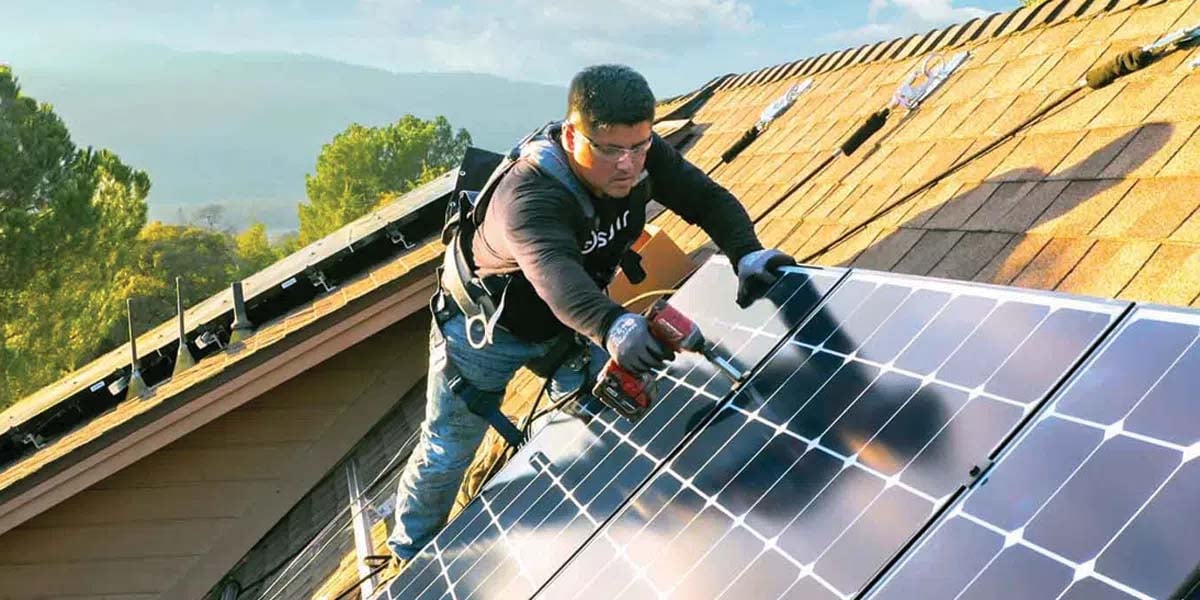
The drivers behind that growth have fundamentally changed. To begin with, consumers are not necessarily investing in distributed energy systems simply because of the environmental benefit. Increasingly, they are making decisions rooted in economics, resilience, predictability, and security. The world has become more volatile, and homeowners are responding accordingly.
Energy rates are increasing like never before with the growth of data centers and the electrification of the built environment and transportation. Additionally, mounting geopolitical instability, including ongoing tensions involving Iran and renewed concerns around global oil supply disruptions, is exposing the fragility of centralized energy systems.
At the same time, climate disasters are becoming more frequent, more expensive, and more disruptive, placing enormous pressure on electric grids, utility infrastructure, insurance markets, and household budgets alike.
Americans are becoming increasingly uneasy about the reliability of the grid itself. Extreme heat, natural disasters, and aging infrastructure are all contributing to a growing sense that uninterrupted power can no longer be taken for granted. In many parts of the country, the question has shifted from whether outages will occur, to how often, how long they will last, and how prepared households will be when they happen.
Distributed renewable energy offers something traditional energy systems cannot: localized control and reduced vulnerability to soaring energy prices, global politics, climate events, and grid instability.
Green Builder Media’s COGNITION Smart Data shows a dramatic increase over the past few years in consumer interest in solar, battery storage, backup power, electrification, and energy independence.
What’s particularly notable is the emotional framing around these technologies: consumers are increasingly associating distributed energy systems not just with environmental virtue, but with protection from outages, rising utility bills, economic uncertainty, and systemic instability.
Texas: A Preview of What Comes Next
One of the most interesting examples of the shifting housing market is a new partnership between Sunrun and Reliant Energy designed specifically for the Texas market. On the surface, the program combines rooftop solar, battery storage, and distributed power plant participation into a turnkey offering for new homes. But, beneath the technology lies something much more significant: a completely new approach to how homes interact with the grid and how homeowners think about energy.
Electricity rates in Texas have climbed sharply in recent years, and concerns about grid reliability remain extraordinarily high following repeated large-scale outages. According to U.S. Energy Information Administration (EIA), electricity rates in Houston have increased approximately 30% from $0.15/kWh to $0.20/kWh, while nearly 90% of Houston-area residents report concerns about extended summer outages. Texas utility costs are projected to continue rising significantly over the next several years.
The accelerating demand for distributed energy systems matches the surging homeowner desire for predictability, continuity, and peace of mind.
Reliability: A Baseline Requirement
Rather than positioning solar and storage as optional upgrades, the Sunrun/Reliant Energy program reframes energy resilience as an integrated service embedded directly into the homeownership experience.
Through Sunrun’s Texas GridReady Distributed Power Plant program, individual home batteries can be aggregated into a coordinated grid resource capable of supplying energy back to the grid during periods of peak demand. According to Sunrun, “When you begin service on a qualifying Reliant electricity offer, your battery will automatically be enrolled in the Texas GridReady program, which can use your battery to supply electricity to the grid during periods of high demand. Once your battery is participating, you could earn monthly bill credits from Sunrun.”
In effect, homes are evolving from passive energy consumers into active energy assets. That distinction matters enormously. Historically, electricity flowed in one direction: from large, centralized utilities outward to dependent consumers. The emerging distributed energy model changes that relationship entirely. Homes equipped with solar and battery storage can now generate, store, manage, and even distribute power dynamically in response to grid conditions.
The Builder Opportunity
For decades, builders competed largely on location, finishes, square footage, and price, but the market is changing faster than many builders realize. Consumers are becoming acutely aware that utility costs, insurance premiums, outage vulnerability, and long-term operating expenses may ultimately matter more than cosmetic upgrades.
The traditional housing sales model, which prioritized countertops, appliances, and finishes, feels increasingly disconnected from the anxieties homeowners are actually carrying. In many markets, homeowners are quietly recalculating what “luxury” means. Increasingly, luxury means stability, and builders who understand that will gain enormous competitive advantage
The Sunrun/Reliant Energy partnership offers “Reliability-as-a-service,” a concept that may ultimately define the next chapter of housing innovation. Reliability itself is becoming a premium feature, not unlike wellness, connectivity, or location. In markets increasingly shaped by climate volatility and infrastructure strain, the ability for a home to maintain livability during disruption may become one of the most important forms of value a builder can offer.
There is no cost for builders associated with the Sunrun/Reliant Energy program, but plenty of upside.
The Bigger Shift
What’s unfolding in Texas is not simply a solar story—it’s part of a much larger societal transition toward decentralization, resilience, and local control. For decades, Americans outsourced critical systems to centralized institutions: utilities, energy generation, infrastructure networks, and insurance markets. Many of those systems are now under extraordinary stress. As a result, homeowners are seeking greater autonomy and security in an increasingly uncertain world.
That does not necessarily mean disconnecting from the grid entirely, but it does involve reducing vulnerability to it. The homes that define the future will not simply be beautiful or efficient. They will be adaptive, resilient, intelligent, and capable of protecting the people who live inside them. Increasingly, they will also function as part of a broader interconnected energy ecosystem that rewards flexibility, responsiveness, and long-term thinking.
To learn more about Sunrun’s program in Texas, check out the video below and visit https://www.sunrun.com/new-homes/texas-home-builders.
By Sara Gutterman
As cofounder and CEO of Green Builder Media, Sara is a visionary thought leader and passionate advocate for sustainability. A former venture capitalist, she has participated in the life cycle (from funding to exit) of over 20 companies, with an emphasis on combining sustainability and profitability. She lives in Lake City, Colo., with her husband, where she is an avid long-distance runner, snowboarder, and Crossfit trainer. She is also on the Board of Directors at Dvele, runs the Rural Segment for Energize Colorado, and is a former County Commissioner.Also Read